
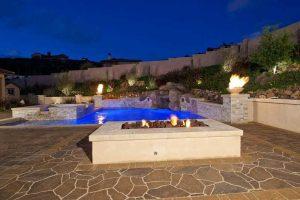
Choosing paver colors is one of the most permanent design decisions you will make for your outdoor space. Unlike furniture or paint, pavers stay in place for decades. Understanding what works in San Diego’s specific climate and design landscape helps you make a choice you will love for years.
This guide shares color trends based on actual project installations across San Diego County over recent years, including what is gaining popularity and what is fading.
Top Paver Colors in San Diego
Based on project installations across the county, here are the colors San Diego homeowners choose most often.
1. Sand and Tan Blends
These warm neutral tones remain the most requested color family, appearing in roughly one quarter of all installations. The appeal is universal: they complement nearly every architectural style, hide dirt reasonably well, and stay cooler than darker options.
Best for: Spanish and Mediterranean homes, courtyard pavers, traditional ranch style properties
Performance: Excellent heat management, moderate dirt visibility, minimal fading over time
Trend status: Steady and timeless, neither increasing nor decreasing in popularity
2. Charcoal and Slate Gray
Gray tones have risen dramatically in popularity, now representing approximately 20 percent of installations. This reflects broader design trends toward modern, contemporary aesthetics across San Diego’s coastal communities.
Best for: Modern and contemporary homes, entrance pavers, properties with cool-toned exteriors
Performance: Shows dust and pollen more easily, absorbs heat in direct sun, excellent color retention
Trend status: Increasing, especially in Encinitas and Solana Beach
3. Tumbled Brown and Walnut
These rich earth tones work beautifully with San Diego’s natural landscape and remain popular at about 15 percent of installations. The tumbled texture adds old world character that pairs well with Spanish Colonial and Tuscan influenced architecture.
Best for: Backyard patios, homes with natural stone accents, properties with mature landscaping
Performance: Good heat management, hides stains well, develops attractive patina over time
Trend status: Steady among traditional home styles, slightly decreasing in newer developments
4. Cream and Off-White
Light cream tones appear in about 12 percent of projects, primarily around pool decks where cool surface temperatures matter. These colors reflect heat effectively but require more maintenance to keep clean.
Best for: Pool surrounds, walkways in shaded areas, Mediterranean style homes
Performance: Stays coolest underfoot, shows dirt and algae more readily, may require more frequent cleaning
Trend status: Steady for pool applications, slight decrease for general patios
5. Multi-Color Blends
Pavers with three or four color variations in each unit represent about 10 percent of installations. These blends create visual interest while hiding wear patterns and stains better than solid colors.
Best for: Large patio areas, high traffic zones, families with children
Performance: Excellent at hiding imperfections, timeless appearance, complex installation patterns work well
Trend status: Steady, appreciated for practical benefits rather than design trends
6. Red and Terracotta
Traditional red brick tones have declined but still account for about 8 percent of projects. These colors work best with specific architectural styles and can feel dated in modern settings.
Best for: Colonial and Craftsman homes, historic districts, properties with brick accents
Performance: Good heat management, shows fading over 10+ years, classic appearance
Trend status: Decreasing overall, but still appropriate for traditional architecture
7. Graphite and Anthracite
Very dark charcoal and near-black pavers represent about 5 percent of installations. These make a bold statement but come with practical considerations in sunny San Diego.
Best for: Modern driveway installations, shaded areas, accent borders
Performance: Gets very hot in direct sun, shows dust and salt deposits, dramatic appearance
Trend status: Stable among contemporary designs, rarely chosen for pool areas
8. Buff and Yellow Tones
Warmer yellow-based neutrals appear in about 4 percent of projects. These complement certain architectural styles but can feel dated if not carefully selected.
Best for: Southwest style homes, desert landscaping themes, rustic designs
Performance: Good heat management, can fade to less appealing tones over time
Trend status: Decreasing, being replaced by cooler sand tones
9. Blue-Gray and Coastal Tones
Cool gray tones with blue undertones are emerging, currently at about 3 percent of installations. These pair beautifully with coastal properties but require careful coordination with home exterior colors.
Best for: Beach style homes, Carlsbad and Oceanside coastal properties, contemporary designs
Performance: Good heat management, may shift in undertone over time, shows dirt moderately
Trend status: Increasing in coastal areas
10. Mixed Contemporary Patterns
Intentionally mixed installations using two or three coordinating colors in deliberate patterns account for about 2 percent of projects. These require skilled design and installation but create unique results.
Best for: Statement patios, properties with professional landscape design, homeowners who want something distinctive
Performance: Varies by color selection, complex installation increases labor costs
Trend status: Slowly increasing as homeowners seek personalization
Regional Color Preferences in San Diego County
Location influences color choice more than you might expect.
Coastal Communities
Solana Beach, Encinitas, and Carlsbad coastal properties lean toward cooler color palettes. Gray tones, blue-grays, and light sand colors dominate. This reflects both design trends and practical considerations: lighter colors stay cooler, and gray tones complement coastal architecture.
Inland Communities
Escondido and Poway homeowners more often choose warm earth tones, browns, and traditional tan blends. These colors complement the warmer architectural styles common inland and work well with natural drought tolerant landscaping.
Architectural Influence
Spanish and Mediterranean homes across the county almost universally select warm sand, tan, or tumbled brown pavers. Contemporary and modern homes strongly favor gray tones regardless of location. Ranch and traditional homes typically choose warm neutrals that blend with natural surroundings.
Practical Color Considerations
Aesthetics matter, but so does performance. Here is what to consider beyond visual appeal.
Heat Absorption
Color significantly affects surface temperature in San Diego’s sunny climate.
| Color Family | Surface Temperature Increase | Best Application |
|---|---|---|
| Light cream/white | 10-20°F above air temp | Pool decks, bare foot areas |
| Sand/tan | 20-30°F above air temp | General patios, walkways |
| Medium brown | 30-40°F above air temp | Shaded areas, driveways |
| Charcoal/dark gray | 40-50°F above air temp | Driveways, shaded patios |
| Black/anthracite | 50-60°F above air temp | Borders only, not main surfaces |
For pool deck installations, lighter colors are strongly recommended. Dark pavers around pools can reach temperatures that cause discomfort or even burns on hot summer days.
Dirt and Stain Visibility
Lighter colors show dirt, algae, and leaf stains more readily. Darker colors hide most stains but show dust, pollen, and salt deposits. Multi-color blends offer the best overall stain hiding capability.
For high traffic areas or homes with trees, consider medium tones or multi-color blends that mask wear patterns.
Fading Over Time
All pavers experience some color change with UV exposure. Quality pavers made with integral color throughout the material (not just surface pigment) maintain appearance better over decades.
Reds and oranges tend to fade most noticeably. Browns, tans, and grays maintain consistency longest. Porcelain pavers offer excellent fade resistance due to their manufacturing process.
Color Predictions for Coming Years
Based on current trends and broader design movements, here is what we expect to see:
Continuing to rise: Cool gray tones, blue-gray coastal palettes, large format pavers in neutral colors, mixed material installations combining pavers with natural stone accents
Remaining stable: Sand and tan classics, tumbled brown earth tones, multi-color blends
Likely to decline: Bold reds, yellows, high contrast patterns, very dark colors for main surfaces
Emerging interest: Warm gray (greige) tones that blend gray and beige, subtle texture variations in single colors, matte finishes over glossy
Making Your Color Decision
The best color choice balances aesthetics with practical performance. Consider these steps:
- Look at your home’s exterior colors, roofing, and existing landscaping
- Assess how much direct sun your project area receives
- Think about maintenance preferences and realistic cleaning frequency
- View samples outdoors in your actual space, not just in a showroom
- Consider how the color will look with furniture and outdoor decor
San Diego Pavers brings material samples to your property so you can see colors in your actual lighting conditions. We help you select options that complement your home and perform well in your specific setting.
Contact us to schedule a consultation and see color options that work for your project. Or request a free quote to get started.