
Homeowners want to know if paver installation is a smart investment. The answer depends on your goals, timeline, and how you define “return.” This guide examines the actual data on paver ROI so you can make an informed decision.
Understanding ROI for Outdoor Improvements
Return on investment for home improvements works differently than financial investments. You will likely not “profit” from any home upgrade. Instead, ROI measures how much of your investment you recover when selling, combined with the value you receive from using the improvement.
According to the National Association of Realtors 2023 Remodeling Impact Report on Outdoor Features, a new patio earns a joy score of 9.7 out of 10, one of the highest satisfaction ratings of any home project. The same report indicates homeowners can expect to recover approximately 60 percent of installation costs at resale.
Other industry research suggests ROI ranges from 30 to 80 percent depending on project scope, material quality, and local market conditions.
Three Ways to Measure Paver ROI
Looking at ROI from multiple angles gives you a complete picture of value.
Immediate Home Value Impact
Hardscape improvements affect home value in two ways: appraisal value and perceived value to buyers.
Appraisers typically classify paver installations as site improvements. They add value but not at a dollar for dollar rate. A $10,000 patio installation might add $5,000 to $7,000 to appraisal value depending on quality and market conditions.
Buyer perception often exceeds appraised value. Real estate data shows that homes with quality outdoor living spaces sell faster than comparable homes without these features. In San Diego’s climate where outdoor living is year round, this advantage increases.
The 2026 Cost vs. Value Report from Remodeling Magazine confirms that exterior improvements dominate the top ROI rankings. Eight of the top ten projects for return on investment are exterior work, not kitchens or bathrooms.
Lifestyle ROI
Lifestyle ROI measures the value you receive from using your outdoor space over time. This calculation matters most if you plan to stay in your home.
Consider a $12,000 patio installation that your family uses for outdoor dining, entertaining, and relaxation for 15 years. That works out to $800 per year, or about $67 per month for a space that improves daily life.
Compare this to other monthly expenses that provide less tangible value. Many homeowners find that outdoor living improvements offer better lifestyle value per dollar than indoor upgrades.
Quality pavers last 25 to 50 years with proper maintenance. Your lifestyle ROI compounds over decades of use, making the per year cost decrease significantly over time.
Resale ROI
Resale ROI is what most people think of when discussing home improvement returns. Here is what the data shows for California markets.
According to HomeLight research, a mid-scale patio project averaging around $3,300 returns approximately $3,500 at resale, representing roughly a 9 percent positive return. This is notably higher than most interior renovations at comparable price points.
Higher end projects show different patterns. Elaborate outdoor projects with extensive features typically recover only 40 to 60 percent of costs. Simple, well executed improvements perform better.
The lesson is clear: quality matters more than complexity for resale ROI.
ROI by Project Type
Different paver projects offer different return profiles.
Driveway Pavers: Curb Appeal Advantage
Driveway pavers impact the first impression of your home. Real estate professionals consistently rank curb appeal among the top factors influencing buyer decisions.
Investment range: $7,000 to $18,000 for typical San Diego driveways
Expected return: 50 to 70 percent of costs recovered at resale
Primary value: Immediate visual impact, differentiation from neighboring homes, perception of quality
Driveways see high ROI because buyers notice them immediately. A cracked concrete driveway creates a negative first impression before buyers enter the home. A paver driveway signals quality and care.
Patio Pavers: Outdoor Living Premium
Patio installations create usable square footage at a fraction of indoor construction costs.
Investment range: $4,500 to $15,000 for typical patios
Expected return: 50 to 80 percent of costs recovered at resale
Primary value: Extends living space, enables entertaining, year round use in California
In San Diego specifically, outdoor living space commands a premium. Adding 400 square feet of indoor space might cost $100,000 or more. Adding 400 square feet of quality outdoor living space through pavers might cost $6,000 to $12,000. Buyers recognize this value.
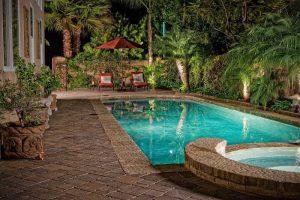
Pool Deck Pavers: Safety and Aesthetics
Pool deck pavers serve functional and aesthetic purposes for pool homes.
Investment range: $8,000 to $25,000 depending on deck size
Expected return: 40 to 60 percent of costs recovered at resale
Primary value: Safety improvements, visual upgrade, cooler surface temperatures with proper material selection
Pool deck projects show slightly lower percentage returns because pool homes already command premiums. However, a dated or deteriorating pool deck can actually reduce home value. Updating the deck protects existing value while adding new appeal.
Pavers vs. Other Home Improvements
How do pavers compare to competing investment options?
| Project Type | Typical Cost | ROI Range | Notes |
|---|---|---|---|
| Garage door replacement | $4,500 | 150-200% | Highest ROI home improvement |
| Paver patio | $8,000 | 50-80% | Strong lifestyle value |
| Minor kitchen remodel | $28,000 | 70-85% | Higher cost, similar percentage return |
| Bathroom remodel | $25,000 | 55-70% | Moderate return |
| Major kitchen remodel | $80,000 | 40-55% | Diminishing returns at high spend |
| Paver driveway | $12,000 | 50-70% | Strong curb appeal impact |
The data shows that modest outdoor improvements often outperform expensive interior renovations on a percentage basis. A $10,000 paver project returning 60 percent ($6,000) uses less capital than a $30,000 kitchen returning 75 percent ($22,500) while freeing funds for other uses.
The “It Depends” Factors
ROI varies based on factors specific to your situation.
Neighborhood Baseline
If every home in your neighborhood has paver driveways and patios, lacking these features hurts resale value. If few homes have quality hardscaping, you gain competitive advantage.
Research your local market. Drive through neighborhoods in your service area and note what comparable homes offer.
Installation Quality
Poorly installed pavers that shift, settle, or allow weed growth reduce rather than add value. Quality installation from licensed contractors protects your investment.
Industry data from the Interlocking Concrete Pavement Institute indicates professionally installed paver patios can last 30 years or more with proper care. DIY or poorly executed installations often require costly repairs within five to ten years.
Material Longevity
Premium materials cost more upfront but last longer and maintain appearance better. Budget pavers may save money initially but fade, crack, or show wear that reduces perceived value.
Market Timing
Real estate market conditions affect all home improvement ROI. In strong seller’s markets, outdoor improvements help your home stand out. In buyer’s markets, they may be expected rather than exceptional.
Calculating Your Personal ROI
Use this framework to estimate your specific return.
Step 1: Determine your timeline. How many years until you might sell?
Step 2: Estimate lifestyle value. How often will you use the space? What activities will it enable?
Step 3: Research comparable sales. What are similar homes with and without outdoor improvements selling for in your area?
Step 4: Calculate cost per year of ownership. Divide project cost by expected years of use.
Example:
- $10,000 patio project
- 10 year ownership timeline
- Weekly family use, monthly entertaining
- Estimated 60% resale recovery ($6,000)
True cost: $10,000 investment minus $6,000 resale recovery = $4,000 net cost Annual cost: $400 per year for a space that significantly improves lifestyle
Making the Investment Decision
The data supports paver installation as a sound investment for homeowners who:
- Plan to enjoy the space for at least 3 to 5 years
- Value outdoor living and entertaining
- Want to improve curb appeal and differentiation
- Prefer projects with high satisfaction scores
- Are working with qualified, licensed contractors
Pavers offer something few home improvements provide: a combination of strong resale recovery, high owner satisfaction, and decades of practical use.
San Diego Pavers helps homeowners evaluate their options and design projects that deliver lasting value. Contact us to discuss your project goals and see real examples of completed work in your area.
Request a free quote to understand your investment options.